01
One operating record
Applications, vendors, permits, sessions, payments, and reports stay tied to the same market workflow.
Vendors should not have to chase every answer through email. A stronger vendor portal gives applicants and approved vendors a clearer path to submit information, understand status, manage required context, and communicate with the market team.
The Market Manager connects public application intake, applicant portal workflows, vendor records, product catalog controls, support requests, change requests, and weather advisories with the manager workspace.
Product image and outcome cards describing connected market operations.
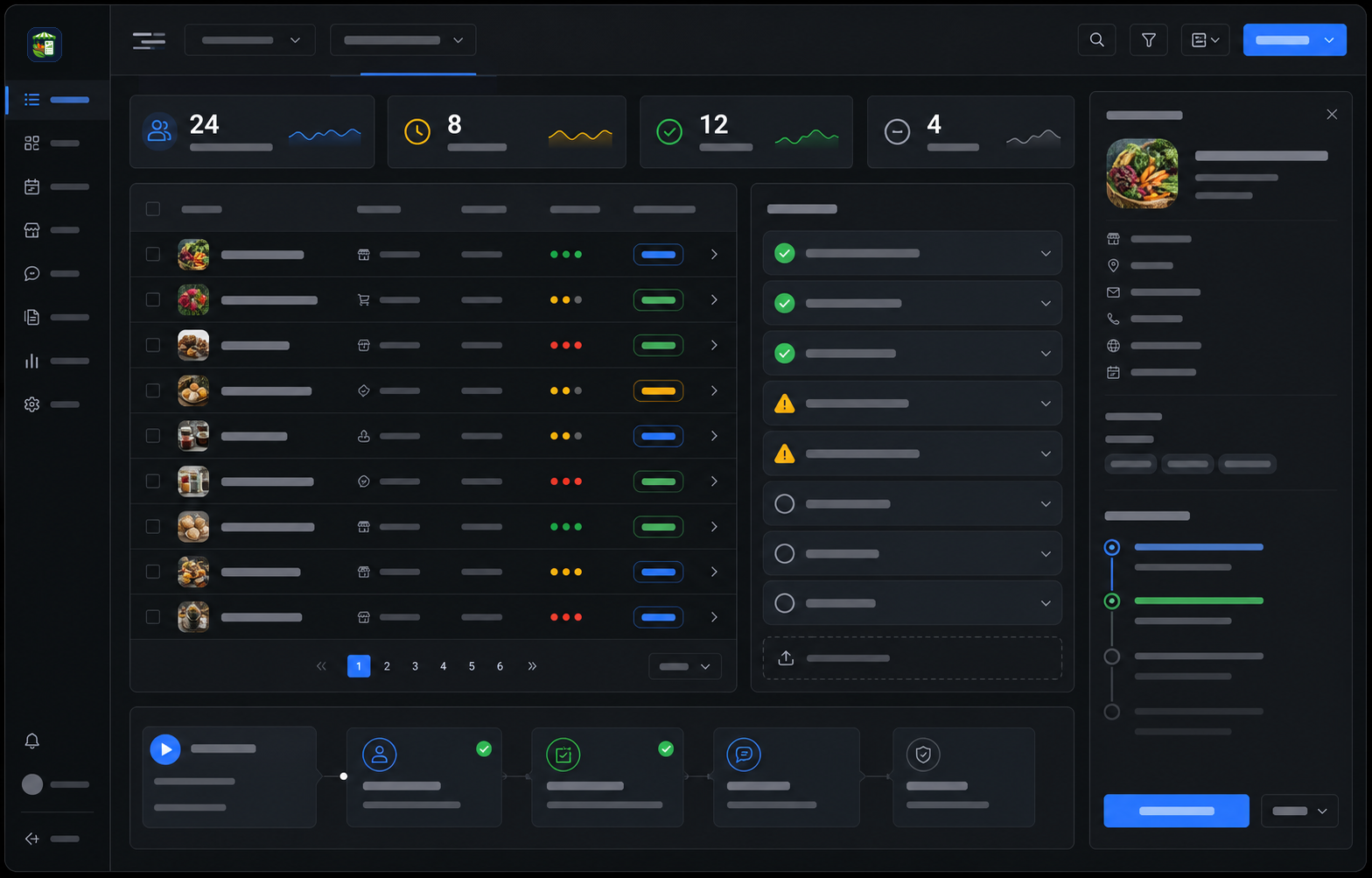
Applications, vendors, permits, sessions, payments, and reports stay tied to the same market workflow.
The team can see readiness, gaps, assignments, and closeout work without rebuilding the story in spreadsheets.
Operational context carries from intake to market day so managers can act before small problems become urgent.
Each part of the page maps to a real operating decision: what replaces the spreadsheet stack, how the team works through the week, what stays connected, and what managers should measure.
The portal experience begins before a vendor is approved. Applicants need draft and resume paths, status visibility, document collection, and a way to respond to update requests without losing context.
Approval should not force the team to rebuild the vendor relationship from scratch. Vendor portal workflows can carry approved applicant context into vendor operations, helping the market manage profile details, product information, requirements, support, and future communication.
Some markets want vendor product information to support public discovery while keeping private records protected. The Market Manager includes vendor product catalog workflows and publication controls for public-safe catalog surfaces.
Vendor questions become easier to manage when they are part of the portal workflow instead of scattered across inboxes. Support requests, change requests, and vendor messages can connect back to the vendor and market record.
Vendors need market-specific updates when schedules, weather, or operating instructions change. Portal workflows can support weather advisories and market communication so updates stay tied to the operating record.
A vendor portal should reduce back-and-forth without hiding important decisions from managers. The Market Manager is strongest when the vendor-facing experience stays connected to applications, permits, sessions, product records, support, communication, and reporting.
Keep moving through the buying path with focused pages for adjacent workflows inside The Market Manager.
Direct answers for buyers comparing spreadsheets, form tools, and market-specific operating software.
Yes. The platform supports applicant portal workflows, vendor-facing self-service patterns, product catalog controls, support requests, change requests, and vendor communication tied to market operations.
Applicant portal workflows can support status context, draft and resume paths, update requests, and review communication.
Yes. Vendor product catalog workflows and publication controls can help markets manage public-safe product information.
Yes. Vendor support and change request workflows can connect requests to the vendor and manager workspace.
Public and vendor-facing surfaces should expose only safe information. Protected manager records remain behind authenticated access.
Portal activity can connect to applications, vendor records, permits, sessions, product records, support, communication, and reports.
Read the supporting guides, checklists, and comparisons behind this workflow.